

4 Questions For The Artist Embarrassed By Christian Music
Are you an artist who has avoided being associated with CCM, Gospel, or Worship music because of how you might be perceived, or perhaps because of how you perceive IT? Or maybe you just don’t like it but you suspect you were uniquely shaped to write and create Christian Music? These 4 questions are designed to help you wrestle through why you may feel this way and what to do about it…
Are you an artist who has avoided being associated with CCM, Gospel, or Worship music because of how you might be perceived, or perhaps because of how you perceive IT? Or maybe you just don’t like it but you suspect you were uniquely shaped to write and create Christian Music? These 4 questions are designed to help you wrestle through why you may feel this way and what to do about it…

5 Questions Before You Launch Your Music Career
Your answers to these questions can make or break your success in music:
• Do you know your why?
• Who are you as a music maker?
• What is the story you’re telling?
• How are you going to reach those who share your why? (Similar but different than #1)
• When are you going to start?
Your answers to these questions can make or break your success in music:
• Do you know your why?
• Who are you as a music maker?
• What is the story you’re telling?
• How are you going to reach those who share your why? (Similar but different than #1)
• When are you going to start?

10 BOOKS TO HELP YOU GO FULL TIME IN MUSIC
These 10 books absolutely contributed to my personal transition from “side-thing” to “full-time” in music over the last couple of years. Going from hobbyist to pro is no accident. If you are in the midst of deciding whether or not to make the jump it might help to gain some insight first from people who have been there so you can know what to expect. Bonus: All of these make GREAT audiobooks!
These 10 books absolutely contributed to my personal transition from “side-thing” to “full-time” in music over the last couple of years. Going from hobbyist to pro is no accident. If you are in the midst of deciding whether or not to make the jump it might help to gain some insight first from people who have been there so you can know what to expect. Bonus: All of these make GREAT audiobooks!
. . .
DISCLAIMER: Being that I’m a person of faith, some of these suggestions come from that world-view. However, I believe that whether you’re religious or not all of these books have some great take-aways. Cheers and happy reading!



6 Productivity Boosters For Songwriters
Check out my 6 Productivity Boosters For Songwriters…

5 DYI Acoustic Treatment Tricks
If I had to guess, most of you are recording in a square-shaped room made of drywall: literally the absolute worst recording environment. We’ve got to make sure all that the microphone picks up is your voice...not room ambience. And for monitoring, a well-tuned room will go a long way toward better mixes. As a full-time music producer in the age of Covid-19, I’ve spent A LOT of time in recent months helping people get killer vocals at home before they send them to me. It’s really easy to spend tons of money on acoustic treatment but these 5 tricks will help you get it done for a fraction of the cost…
If I had to guess, most of you are recording in a square-shaped room made of drywall: literally the absolute worst recording environment. We’ve got to make sure all the mic picks up is your voice...not room ambience. And for monitoring, a well-tuned room will go a long way toward better mixes. As a full-time music producer in the age of Covid-19 I’ve spent A LOT of time in recent months helping people get killer vocals at home before they send them to me. It’s really easy to spend tons of money on acoustic treatment but these _____ tips will help you get it done for a fraction of the cost.
Sound absorption
If you’re using a large-diaphragm mic in an untreated room you’ll hear a phase-y, chorus-y sound in your vocal tracks. Often it’s so bad that it’s impossible to fix it with EQ or compression techniques. This is called reflection (imagine a bullet ricocheting back and forth off parallel surfaces). One way to fix this is sound absorbing acoustic panels. You can order a 6-pack of 2’x4’ 2-inch-thick pro-grade fiberglass panels for just over $100, including shipping. Look for Owens Corning 703 on Amazon. And then choose the fabric of your choice to wrap them yourself. This trick could save you thousands.
Corners Are The Enemy
Other than the walls, the second biggest problem I hear when artists send me DYI vocals are the corners. It’s a hallow sound like you’re recording through an underground water pipe. Sometimes you can EQ this sound out but then it can make your vocal-tone suffer because it pulls out out necessary low-end. Also when monitoring, those corners are probably doing funky things to everything below 200-400 Hz…all your essential low-end. You can use OfferUp, Facebook Marketplace, or craigslist to look for used bass traps. Or YouTube how to make your own.
Mattress Vocal Booth
Some of my favorite DYI vocal booths have been made with mattresses. Seriously. It’s actually a time-tested trick used on massive, commercially-successful songs. If for some reason you have access to additional mattresses (at least four), try making a booth with 3 walls and a roof. Then use a mic shield with your mic on a stand and record with you and your mic completely inside the booth. Make sure your back is facing the back wall of the mattress-shelter. If this isn’t an otpion for you right now, a second option might be a closet full of clothes.
Whip Up Some Clouds
The concept of a cloud is it helps minimize the reflection bouncing off the ceiling. It’s one of the simplest ways to tighten up your mixes. And it’s essential if you’re recording vocals in your control-room. I’ve seen this done lots of ways. One way is to run wires or cables across your room about 4-6 inches below your ceiling and between 6 to 16 inches apart. Then spread out thick blankets/comforters on top of the wires. Fold them to create as much density as possible. The more the better. Another thing you can do is double-up the sound absorption panels from the first bullet-point to create 4-inch thick panels. hang the panels a few inches off the ceiling using hooks.
Diffusion
Angles are your friend in a recording environment. Create more surfaces that aren’t parallel to help minimize sound reflection. Back in the day many home-studios used egg-crates for this but honestly I don’t think it’s a very effective (or aesthetically pleasing) way to do this. There are lots of ways you can create your own diffuser walls or panels. There’s countless resources online for this, depending on your level of craftsmanship. But this could be a fun way to get creative in your studio space!
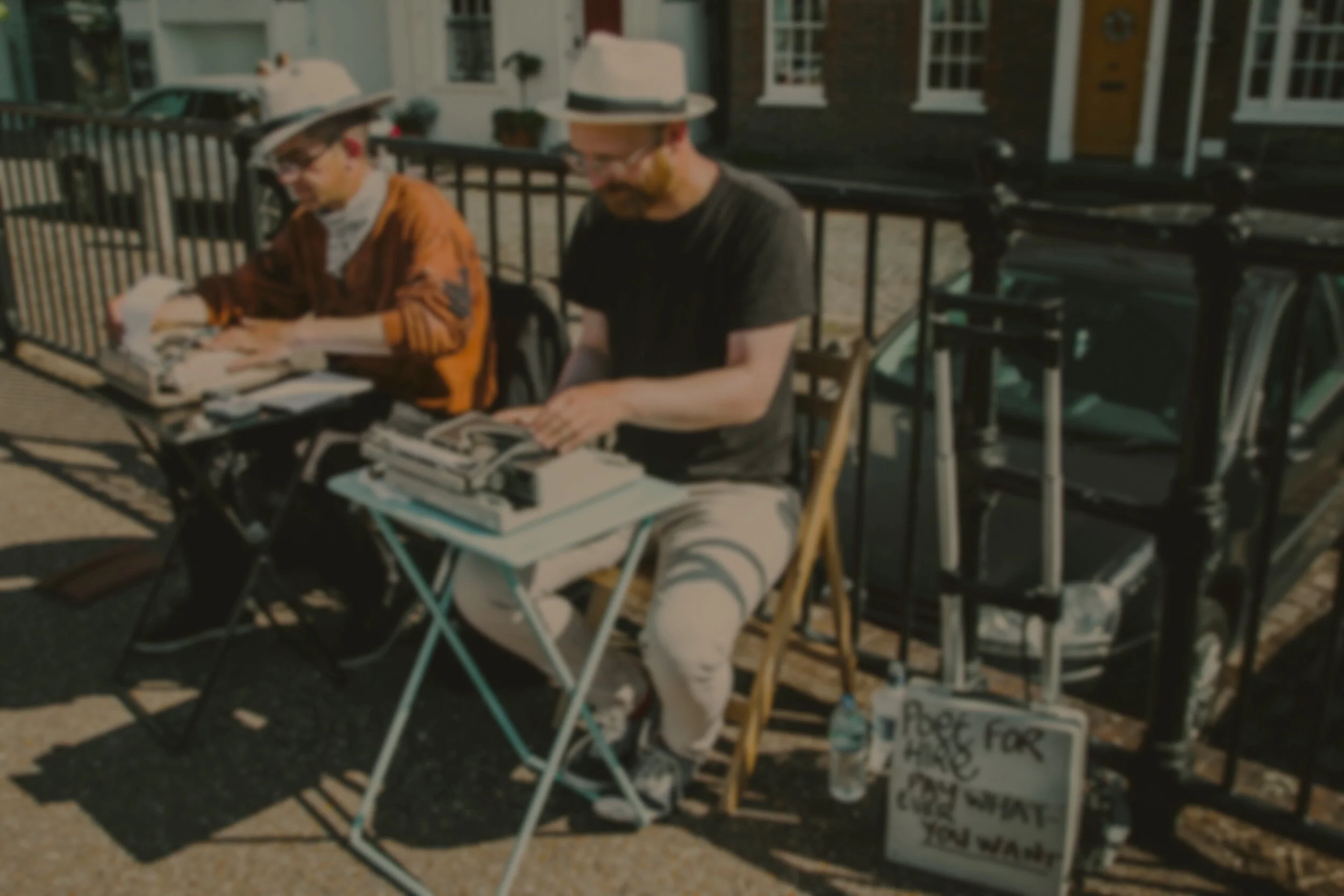
5 Steps Toward Enhanced Co-writing
Co-writing is a normal part of the songwriting life. But many people struggle with the idea of co-writing. Songwriting is often deeply personal and bringing someone else into that process can be understandably uncomfortable at times. These 5 tips can be implemented today to help improve your co-writing experience…
Co-writing is a normal part of the songwriting life. But many people struggle with the idea of co-writing. Songwriting is often deeply personal and bringing someone else into that process can be understandably uncomfortable at times. These 5 tips can be implemented today to help improve your co-writing experience:
Get to know each other
Depending on how well you know your co-writer, meeting to create together can feel awkward. Before “getting down to business,” I’ve found it helps to ask my collaborator how they are doing and to be ready to share how I’m doing. If you’re a little nervous it might help to say so out loud. If you’re having a bad day, try being honest about that. Often these “warm up” conversations can even inform the song you’ll write that day.
Embrace your songwriting superpower
My son loves the Avenger movies. Ever notice how the Avengers are more powerful as a team because each Avenger has a unique superpower they bring to the table? Most songwriters tends to be better at either melody, lyric, or overall vibe. Rarely is a songwriter truly great at all three. What’s your songwriting superpower? And how can you grow in that strength?
Play with the magic number
Recently, a friend who is a top ccm/worship publisher mentioned that he’s discovered the magic number is “three writers in a room.” Two is better than one, but he’s found his best songs emerge when three people write. Once you get the hang of writing with one other writer, challenge yourself to invite a third person into the mix.
Be a good hang
Generosity goes a long way in any relationship. One of my favorite entrepreneurs, Paul The Apostle, wrote this advice: “Do nothing out of selfish ambition or conceit, but in humility consider others as more important than yourselves.” I’ll be honest: I need to improve at this as a co-writer! We can passionately fight toward the perfect lyric, note, or vibe WHILE being considerate and hospitable as collaborators.
Come prepared
Rarely have I had a good co-writing experience if I show up expecting the other person to bring the ideas. Find a way to capture and organize your song ideas so that you can easily reference them at the beginning of a writing session. Even better: have 1-3 ideas already picked out. If the other writer doesn’t have something then you aren’t scratching your heads trying to force “inspiration.”
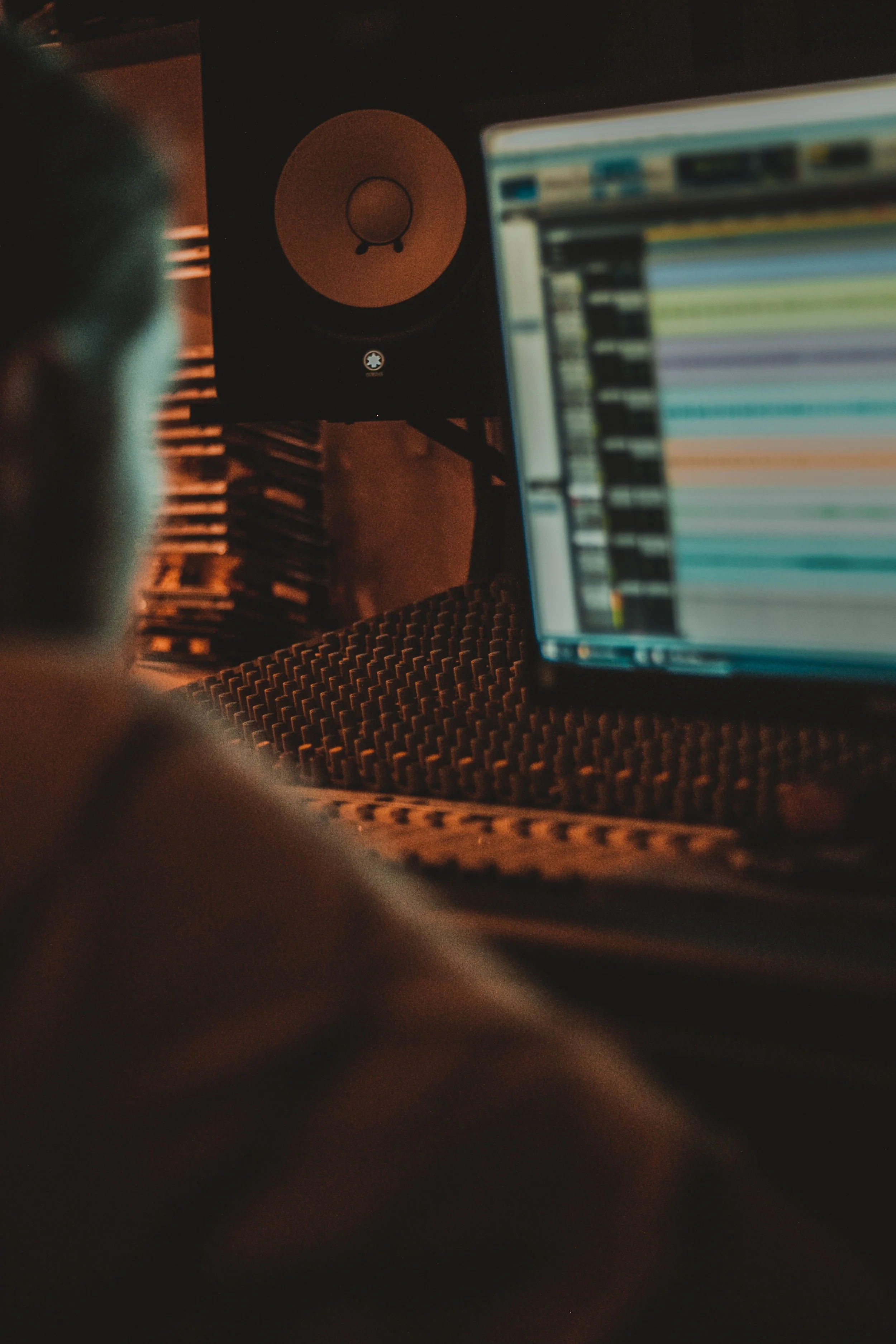
Beginners Guide To Recording Yourself
Are you a songwriter who needs something to pitch to artists or publishers? Or maybe you’re an artist that just wants to demo your song ideas for producers or collaborators? Whatever your reasons and goals, here’s a simple checklist to help you get started with recording yourself at home…
Need to record your own song, album, demo, or podcast at home? Whatever your reasons and goals may be, this simple checklist will help you get started with recording yourself at home…
The gear
First thing you’ll need is to make sure you have the right equipment: a computer (or a phone/tablet), an interface (the thing that allows you to plug in a mic or instrument and listen back to what you record), a mic, and headphones. Because I love you and want to make your life easier I’m gonna be that guy and suggest you buy a used or refurbished Mac. Sure it may cost more than a PC but it’ll be more plug and play and I’ll bet you’ll have a better experience overall.
The software
Once you have the gear you’ll need to decide on a DAW (digital audio workstation). This is an app or program that allows you to press record and then mix together your individual instruments, loops, track, and vocals into a form you can share. There are many DAW’s you can choose from ranging from free to hundreds of dollars. The important thing is to find something that allows you to focus on your craft instead of getting bogged down by technical stuff. Unless you’re going for that, of course.
Setting up
Now that you’ve decided on gear and a DAW, next you’ll need to set it up to make sure it’s all talking to each other. Ideally you’ll want to choose a desk or table as a workspace then connect your interface to your computer. Turn on your interface and computer then open your DAW.
Routing and Signal flow
This is often where people get stuck. But it’s simple. Go to preferences or settings (may be called something similar depending on your DAW and platform). Click on “audio” or “devices” or similar preferences option. Make sure your interface is selected as the input and output device. Then connect your mic to the interface. Create a new audio track (or channel). Once your mic is connected, make sure the input on your DAW’s track (or channel) is the same as the physical input where you plugged in your mic.
(NOTE: If you’re using a condenser mic you’ll need to turn on “Phantom power” or you won’t hear sound. This may be shown as “48v” button.)
Record
Now record-enable the audio track you have selected. If you want to hear what the mic is picking up DURING recording, select the “monitoring” button. Some DAWs may call it “input monitoring” or it may be a “speaker” icon. Most DAWs have this button next to the record button on the track. At this point you should be able to hear audio through your headphones. When you’re ready, hit the main record button and record away!
(NOTE: If you’ve got your mic in the same space as your monitors (speakers), make sure you switch them off or turn their volume all the way down. Otherwise you’ll record the audio from the speakers through the mic along with your vocal or instrument. That will sound less than awesome.
Share
Basically this is the step where you take all the different tracks and mix them together into a file you can share with people or upload to a streaming service. First, in your session’s edit window mode, you usually have to select the start and stop points. Then go to one of the dropdown menus to mix down the song. Different DAWs will refer to this using a variety of different words. For example “bounce” or “export.” If you want a higher resolution file, then export as a .WAV. If you want a file you can easily email or text to someone, then you’ll want to export a more compressed file type such as .MP3 or similar.
5 Steps to Writing Hit-Sounding Songs
I’m guessing you’ve seen lists like this before with all the usual songwriting tips. So I gave it some thought and wrote down 5 fresh but ABSOLUTELY ESSENTIAL elements of a hit-sounding song. These are core principles of what helped me to be voted christiansongwriting.com’s “Songwriter Of The Year” for 2020…
I’m guessing you’ve seen lists like this before with all the usual songwriting tips. So I gave it some thought and wrote down 5 fresh but ABSOLUTELY ESSENTIAL elements of a hit-sounding song. These are core principles of what helped me to be voted christiansongwriting.com’s “Songwriter Of The Year” for 2020.
Don’t Wait For Inspiration
Ed Sheeran talks about “The 10,000 Hour Rule” mentioned in the book Outliers by Malcom Gladwell and then uses the analogy of dirty tap-water. “You gotta turn it on and let the [dirty] water run until it turns into clean water.” Ed explains. His basic premise is you gotta write A LOT in order to get the bad ideas out and before you’ll have the experience to know what’s good or not. So I encourage you to carve out time to PLAN your writes. No better time than today.
One Topic At A Time
Looking at 16-20 lines of lyric it’s too easy to let your emotions lead you off on a poetic tangent. The next thing you know s song about “love” turns into a song about “grace",” “mercy,” “faithfulness,” or whatever. I do it all the time. Be a stickler about this one: The best songs are about ONE THING and ONE THING ONLY! A trick that helps me is to write it like you’re talking to a 10 year old. It might help you hear your theme more objectively. One of the most valuable skills is learning to take a step back from a song and listen to it like it’s someone else’s song.
Don’t waste anything
Have you ever noticed that in the timeless hit songs EVERY SINGLE LYRIC AND EVERY SINGLE NOTE matters? It’s SO easy to settle just to pump another song out. But are we writing a song so that it can connect to people in a meaningful way or to feel the rush of a finished song? (You are the one that connects to THAT feeling!) From what I’ve learned from top hit-makers, and my own experience, is that it takes practice to get a feel for when to call the song quits versus when to take another shot at it.
Make sure it fits “The Formula”
As Friedemann Findeisen writes, in his book “The Addiction Formula,” that every hit song written in the last 50 years has at least two of the three hit-songwriting pillars. And when it comes to writing “commercial songs,” especially pop or songs written for radio, these pillars are what Findeisen calls:
• Hook
• Groove
• Lyrical storytelling
(He adds that for some genres, “Lyric” would be a fourth pillar…which is especially true for the majority of what I work with, namely the Worship and CCM space) Hook and groove are pretty self-explanatory (although I may have to write a post about those two things) but Friedemann explains that “Lyrical Storytelling” has more to do with hype, tension, and implied tension. I think his book has some great tips about this…I’d recommend you pick it up. BUT if I were to summarize in my own words I’d say he’s talking about the power of DYNAMICS. What drops out, and when, and the ratio between “minimal” and “big.” This is HUGELY overlooked but combined with vocal and lyric is probably more than 50% of the difference between “cool song” and “Holy…what is that?!?!”
Production is PART of songwriting
Even though technically a “song” is the sum of a lyric and melody, these days the song isn’t REALLY written until it’s in a state that people can experience it. I’d suggest you learn everything you can about what makes a song SOUND like a hit. Like I wrote in a previous post, try writing WHILE recording…even if it’s just a demo and you’ll have someone else produce it later.

How To Make More Music While You Stay At Home
Like it or not many of us are stuck on home. While there’s plenty to do around the house (or online) it can also be a perfect opportunity to make your next song…or record. Here are four tried-and-true ways to get you started…
Like it or not many of us are stuck on home. While there’s plenty to do around the house (or online) it can also be a perfect opportunity to make your next song…or record. Here are four tried-and-true ways to get you started…

write down goals for your music.
Michael Hyatt, one of my favorite productivity gurus, said it well: “There is a huge power in writing your goals down even if you never develop an action plan or do anything else (not recommended)…When you write something down, you are stating your intention and setting things in motion.” Having a daily planner is helpful for this. I use and recommend the Full Focus Planner.
Make an appointment with yourself to write or record your music.
Another amazing Michael quote: “Making appointments with yourself and scheduling other things around them is key to proactive self-management.” You will be surprised what you will get done when you take this advice. Make an appointment with yourself daily or at least regularly and watch the number and quality of your songs grow.
Try writing your song WHILE recording it.
I found I would get stuck in creative “ruts” when writing primarily on either a guitar or piano. Then I discovered that writing and recording at the same time often broke up the monotony and sparked some creative inspiration. Another way to do this is writing to loops or beats (check out Splice or a similar sample library) or samples. Or try using an app on your mobile device like Garageband or FL Studio Mobile.
Go big or go...
Um, okay so you’re already home. But you get it right? Challenge yourself to do something crazy.
EXAMPLES:
If it feels comfortable to record and release one song, then dare yourself to do three songs instead.
Or what if you make a whole album. C’mon…you got this!
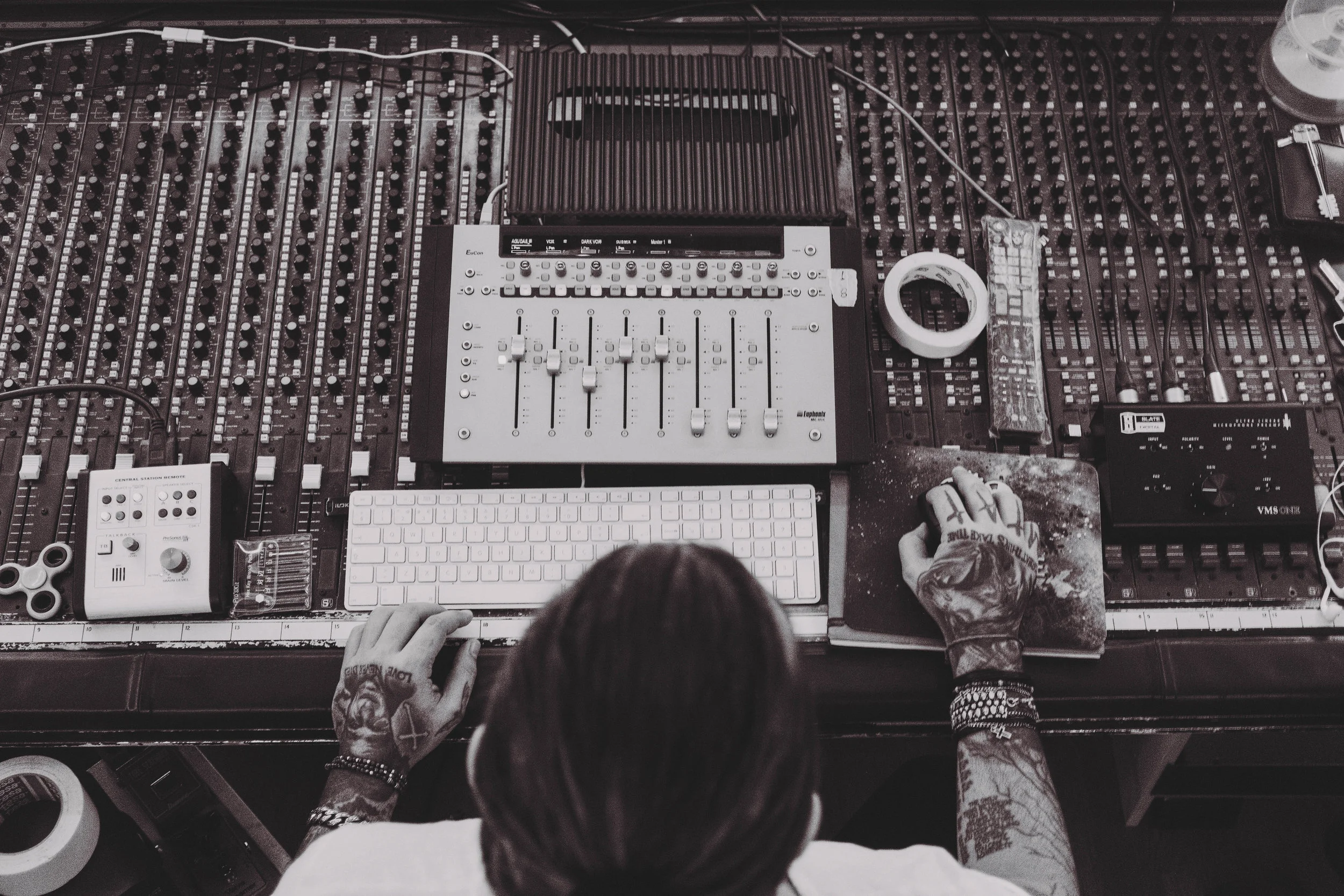
6 Steps To Producing Your Songs
Recently while working with some extremely talented clients, it came to my attention that they were actually unfamiliar with the music production process. I realized that though many people (especially in church/worship leading contexts) may not be strangers to the studio or recording in general they may never have had to be involved in the entire process from beginning to end…
Recently while working with some extremely talented clients, it came to my attention that they were actually unfamiliar with the music production process. I realized that though many people (especially in church/worship leading contexts) may not be strangers to the studio or recording in general they may never have had to be involved in the entire process from beginning to end. So whether you’re hiring a producer to guide the bulk of your recording project or are recording yourself, here’s a break-down of the typical workflow of recording a song…
LYRIC & MELODY
You can make fresh and modern music, beats, and sounds all day long. But an exceptionally written lyric and melody/topline determines the impact and success of a song as much as anything else!
PRO TIP: Consider co-writing with one or two others and don’t settle: Re-write the song until you can’t make it better.
PRE-PRODUCTION
Take the time to decide which key is best for the song. One that features and supports a great vocal performance. The same goes for song tempo. If you plan to record and produce yourself, prep by eliminating as much outside noise and room ambience as possible.
PRO TIP: Invest in acoustic treatment and a vocal booth or shield.
RECORDING/PRODUCING
This is the fun part! Here you record all vocals and instruments, program drums/beats, as well as create all the other sounds in the song. You'll need a capable computer, quality interface, and at least one good mic.
PRO TIP: Record to your DAW's (recording software's) internal click (metronome)
EDITING
After everything is recorded, the individual tracks need to be cleaned up, organized, and repaired. Background noises deleted, vocals tuned and re-timed to fit the groove, drums quantized, etc. Then it's time to mix…
PRO TIP: Try Auto Tune on vocals, or even better...learn to use a more manual program like Celemony's Melodyne.
MIXING
Mixing takes all the individually recorded and edited components and "mixes" them together so that they sound balanced. This is also where final effects are applied.
PRO TIP: Try planning a day or two between production and mixing to rest your ears. It'll make a big difference!
MASTERING
Mastering as an art and science has had to adjust over the decades as people change how they listen to music. But ultimately mastering is about making sure your song can sound balanced through different types of speakers and in comparison to pro, mainstream songs on the charts.
PRO TIP: If hiring a mastering engineer, remove any EQ, compression, or limiting on your master channel before creating the final mix to send to them.

5 Songwriting Habits For Worship Artists
I’m passionate about songwriting. In fact as a music producer, I just see the recording and production process as part of crafting great songs. And even after being voted christiansongwriting.com’s 2019 Songwriter Of The Year, I gotta say I have A LOT to learn…
I’m passionate about songwriting. In fact as a music producer, I just see the recording and production process as part of crafting great songs. And even after being voted christiansongwriting.com’s 2019 Songwriter Of The Year, I gotta say I have A LOT to learn when it comes to writing songs. Here are some good tips and reminders I’ve picked up along the way…

Schedule Time To Pray and Read Scripture
I know…obvious right? But if we believe Jesus’ words in John 15, that “…without [Him] we can do nothing,” then doesn’t that include the songs we write? And in that same passage Jesus explains that those who “abide” in Him will “bear much fruit.”
Voice-memos
Whether you rock Apple, Android, or whatever there’s probably a recording app on your phone that’s designed for taking voice notes or recording meetings, etc. For many pro writers I’ve heard from recently including Phil Wickham, Bethel music writers, Leeland Mooring, etc., these apps have become essential tools. You can drop lyric and melody ideas while driving, running, or whenever. Try it!
SCHEDULE regular time for writing
Hit songwriter Jason Ingram recently said, on the Made It In Music podcast, “If you want me to believe that you’re a songwriter, then show me your calendar.” Yikes. Ryan Tedder, front-man for One Republic and co-host of NBC’s Songland suggests spending at least 3-4 hours per day writing. I’m guessing if you’re like me that would mean re-arranging the schedule a bit.
Co-writing
Co-writing is beyond a fun option these days. It’s the norm. I’ve heard many folks say that they haven’t had much luck with co-writing or they haven’t found that right “chemistry.” But I’ve found the more you do it, the more “chemistry” you find. To quote Seth Mosely, “It’s a numbers game.” I recently sat down with a top CCM and Worship publisher in Franklin, Tennessee. He mentioned that he’s discovered that the “magic number” for co-writers is “three in a room.” That way, chances are you’ve got someone great at lyrics, another person who’s strong with melodies, and ideally a third person who’s great with recording sounds and ideas for the track.
Learn To Record and Produce Yourself
Even if for no other reason than to just make demos. But what if you could even get to the point that you could produce your own songs or albums? If you can learn recording basics like capturing clean vocals, drum programming, recording guitars, etc., you could potentially save thousands of dollars. You could even do the bulk of the production (which tends to be the expensive part) and then have someone else mix and master your project. That’s one way to get maximum quality in the end-product while enjoying maximum savings financially.
Author info
Sam Hart
Producer/Mixer
& Songwriter